
How to Choose a Marketing System for E-Commerce Stores
Choosing the right marketing system is one of the most important decisions an e-commerce store can make — especially in the early to mid-growth stages.
Most e-commerce brands don’t fail because their products are bad.
They fail because their marketing is built on disconnected tactics instead of a system.
A marketing system is not a channel.
It’s the structure that determines how traffic is acquired, converted, retained, and scaled.
This guide breaks down how to choose the right marketing system for your e-commerce store, based on stage, product, and goals.
What Is a Marketing System in E-Commerce?
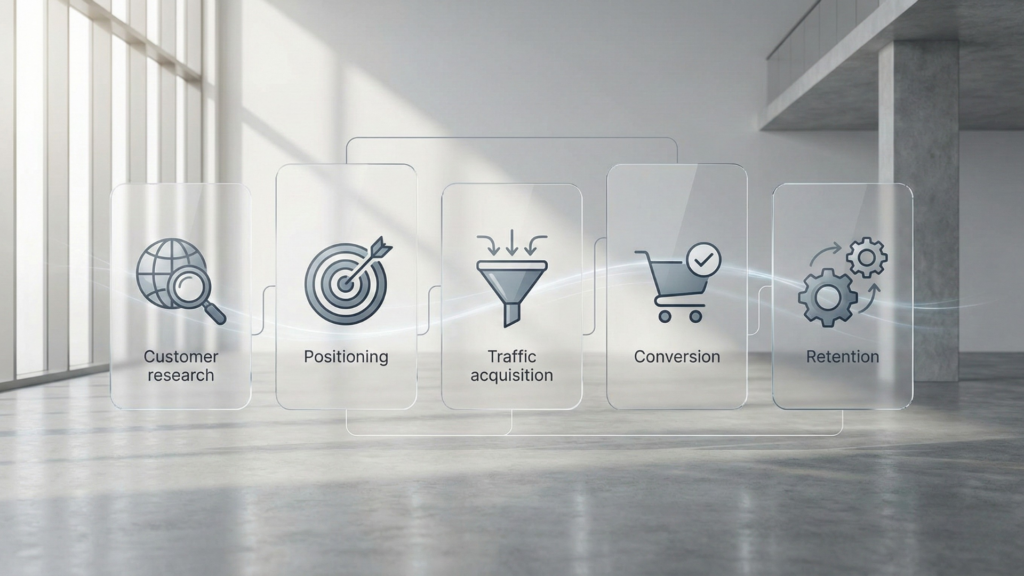
A marketing system is the repeatable framework that connects:
- Customer research
- Positioning and messaging
- Traffic acquisition
- Conversion optimization
- Retention and lifetime value
Unlike individual tactics (ads, influencers, SEO, email), a system ensures that every effort compounds instead of resets.
For e-commerce stores, the right system reduces wasted spend and increases predictability.
Why Most E-Commerce Stores Choose the Wrong System
Many store owners choose marketing systems based on trends, not readiness.
Common mistakes include:
- Running paid ads before validating positioning
- Scaling traffic before fixing conversion
- Chasing influencers without a retention system
- Copying competitors without understanding why something works
The result is short-term spikes followed by stagnation.
The right marketing system depends on where the store is today, not where the owner wants it to be.
Step 1: Identify Your E-Commerce Growth Stage
Before choosing a system, be clear about your current stage.
Early Stage (Validation)
- Low or inconsistent sales
- Limited data
- Unclear product-market fit
At this stage, aggressive scaling systems will fail.
Growth Stage
- Consistent monthly sales
- Clear best-selling products
- Early traction from one or two channels
This is where systems begin to matter most.
Scaling Stage
- Stable conversion rates
- Proven demand
- Need for predictability and efficiency
Each stage requires a different marketing system.
Step 2: Match the System to Your Store Type
Not all e-commerce stores should use the same marketing system.
Product Type Matters
- Single-product stores benefit from focused messaging systems
- Multi-product stores need category and lifecycle systems
- Consumables require retention and repeat-purchase systems
- Premium products rely on trust and education systems
Choosing a system without considering product type leads to misalignment.
Step 3: Core Marketing Systems for E-Commerce Stores
1. SEO-Driven Inbound System
Best for:
- Long-term growth
- Brands with educational or problem-solving products
- Stores that want lower CAC over time
This system focuses on:
- Keyword and intent research
- Question-based content
- Product-led education
- Compounding organic traffic
SEO systems are slow at first, but powerful when matured.
2. Paid Ads Amplification System
Best for:
- Stores with validated products
- Clear positioning
- Proven conversion funnels
Paid ads are not a system on their own.
They amplify what already works.
This system includes:
- Creative testing frameworks
- Funnel clarity
- Conversion rate optimization
- Data feedback loops
Ads scale signals — they don’t create them.
3. Content & Trust-Building System
Best for:
- Health, beauty, supplements, lifestyle brands
- High-consideration purchases
- Brands competing on trust, not price
This system focuses on:
- Educational content
- Authority building
- Consistent messaging across platforms
- Long-term brand equity
Trust systems increase conversion before traffic increases.
4. Retention & Lifecycle System
Best for:
- Consumables
- Subscription products
- Brands with repeat customers
This system includes:
- Email and SMS flows
- Post-purchase education
- Cross-sell and upsell logic
- Customer lifetime value optimization
Retention is often the most underutilized growth lever in e-commerce.

Step 4: Avoid the “Everything at Once” Trap
One of the biggest mistakes e-commerce stores make is trying to run:
- SEO
- Ads
- Influencers
- Affiliates
- Social media
…all at the same time.
A strong marketing system prioritizes one primary growth engine and supports it with secondary systems.
Focus creates momentum.
Scattering effort creates noise.
Step 5: Choose a System You Can Sustain
The best marketing system is one your team can actually execute consistently.
Ask:
- Can we maintain this for 6–12 months?
- Do we have the skills or support needed?
- Does this system reduce complexity over time?
If a system requires constant reinvention, it will eventually break.
Final Framework to Choose the Right Marketing System
Before committing, answer these questions:
- Do we understand our customer deeply?
- Is our positioning clear and differentiated?
- Which channel already shows signs of traction?
- Can this system compound over time?
- Does it align with our product and margins?
If the system answers these positively, it’s likely the right one.

Final Thought
There is no “best” marketing system for all e-commerce stores.
There is only the right system for the right stage.
When marketing is built as a system, growth becomes structured, measurable, and repeatable — instead of reactive.